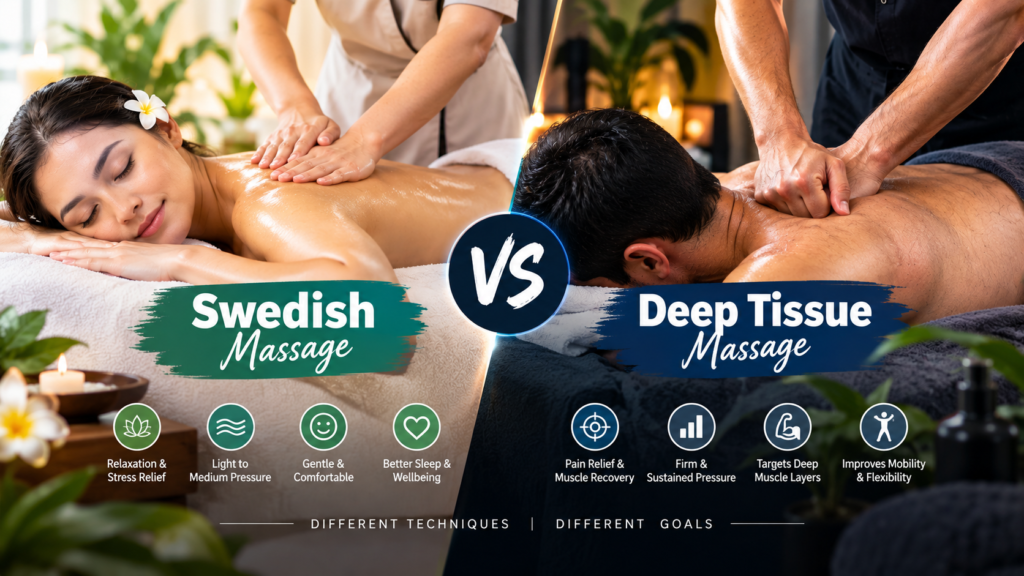
Deep tissue vs Swedish massage comes down to pressure and purpose. Swedish massage uses light to medium pressure with long, gliding strokes for relaxation, while deep tissue massage uses firm, sustained pressure to reach deeper muscle layers for pain relief and chronic tension. Both are among the most requested types of massage worldwide, but they are built for very different goals, and this guide breaks down exactly how to choose between them.
If you have ever stood at a spa counter unsure which session to book, you are not alone. Search interest around this exact comparison stays consistently high because so many people genuinely cannot tell the two apart from the menu alone. This massage difference guide covers technique, pressure, benefits, pricing, and who each style suits best, so you can walk in knowing exactly what to ask for.
What Is Swedish Massage?
Swedish massage is widely considered the classic, foundational style of Western massage therapy. It is built around long, flowing strokes, gentle kneading, and circular hand movements applied to the topmost layers of muscle, with the primary goal of relaxing the entire body rather than targeting one specific problem area. Oil or lotion is almost always used to allow the hands to glide smoothly across the skin.
Origins of Swedish Massage
Swedish massage traces its name and early development back to Sweden, where its foundational techniques were systemized in the 19th century before spreading across Europe and eventually the rest of the world. Travelers interested in Swedish culture and history can find verified national information through VisitSweden, the country’s official tourism website.
Techniques Used in Swedish Massage
- Effleurage, which refers to long, sweeping strokes across the body
- Petrissage, which involves kneading and gently squeezing the muscle
- Friction, using small circular movements to warm the tissue
- Tapotement, a light tapping or percussive motion
- Vibration, a gentle shaking technique used to release surface tension
What Is Deep Tissue Massage?
Deep tissue massage focuses on the deeper layers of muscle and connective tissue rather than the surface. Therapists use slower, more deliberate strokes combined with firm, sustained pressure, often using elbows, knuckles, or forearms to reach tension that lighter techniques cannot access. Little to no oil may be used compared to a Swedish session, since the therapist needs enough grip to work through deeper muscle layers.
Origins and Approach
Deep tissue massage developed as a therapeutic offshoot of general massage practice, built specifically to address chronic pain, muscle adhesions, and long standing tightness rather than general relaxation. It is frequently compared to sports massage because both work on specific problem areas with concentrated pressure, and both are commonly used as part of a broader recovery or rehabilitation routine rather than a one time treat.
Techniques Used in Deep Tissue Massage
- Direct, sustained pressure applied to specific points of tension
- Trigger point work, where pressure is held on a tight spot until it releases
- Slow, deep strokes that move against the grain of the muscle fiber
- Use of elbows and knuckles for deeper, more focused pressure
Deep Tissue vs Swedish Massage: Key Differences
The table below breaks down the core differences at a glance.
| Factor | Swedish Massage | Deep Tissue Massage |
| Pressure | Light to medium | Firm to intense |
| Main goal | Relaxation and stress relief | Pain relief and muscle correction |
| Technique | Long gliding strokes, kneading | Slow, focused, sustained pressure |
| Best for | First timers, general wellness | Chronic pain, injuries, tight muscles |
| Discomfort level | Minimal | Mild to moderate, should never be unbearable |
| Typical price (60 min) | Slightly lower | Often a small premium over Swedish |
| Popularity | Around 28 percent of all massage sessions booked | Around 26 percent of all massage sessions booked |
Pressure Level
This is the single biggest difference between the two. Swedish massage stays light enough to be comfortable for almost anyone, including people who have never had a massage before. Deep tissue massage applies firm, targeted pressure that can feel intense in tight areas, though it should never cross into sharp pain.
Technique and Strokes
Swedish massage relies on rhythm and flow, moving smoothly across large muscle groups. Deep tissue massage is slower and more deliberate, often staying in one spot longer to work through a specific knot or area of tension before moving on to the next region of the body.
Purpose and Goals
Swedish massage is designed to calm the nervous system and leave you feeling refreshed. Deep tissue massage is designed to be therapeutic, targeting specific physical issues such as tight shoulders, a stiff lower back, or muscle soreness after intense activity.
Who It Is Best For
Swedish massage suits people who want pure relaxation, stress relief, or a gentle introduction to massage therapy. Deep tissue massage suits people managing chronic pain, recovering from an injury, dealing with postural issues, or working through muscle tightness from sports or physical labor.
Pain During the Session
Swedish massage is rarely uncomfortable. Deep tissue massage can cause temporary discomfort in areas of built up tension, but a skilled therapist keeps the pressure within a manageable range and adjusts based on your feedback throughout the session. Clear communication with your therapist is the easiest way to make sure the pressure always stays within your comfort zone.
Price Difference
Deep tissue massage often carries a slightly higher price than Swedish massage in many markets, reflecting the additional focus, technique, and physical effort required from the therapist. The gap is usually modest rather than dramatic, so price alone should not be the deciding factor between the two.
Types of Massage: Where Deep Tissue and Swedish Fit In
Deep tissue and Swedish are only two entries in a much wider list of massage styles, and understanding where each fits helps you make a more informed choice the next time you are browsing a spa menu.
Other Popular Massage Styles
- Thai massage, which uses assisted stretching and acupressure for flexibility and stress relief
- Hot stone massage, which combines heated stones with massage strokes for deep relaxation
- Aroma oil massage, which pairs gentle strokes with aromatic oils for a calming sensory experience
- Full body relaxation massage, a broader style focused purely on comfort and stress reduction
- Body scrub treatments, which are often booked alongside massage for smoother, refreshed skin
How to Use This Massage Difference Guide
If your main concern is stress, poor sleep, or simply wanting to unwind, Swedish style techniques are usually the better starting point. If your main concern is physical, such as a stiff neck, sore lower back, or muscle tightness from exercise, a deep tissue approach tends to deliver more targeted relief. Many spas, including sessions built around full body relaxation or aroma oil techniques, blend elements of both depending on what the client needs that day. When in doubt, describe your goal to the spa or therapist directly rather than guessing from the treatment name alone, since naming conventions can vary slightly between locations.
Benefits of Swedish Massage
- Reduces everyday stress and anxiety
- Improves blood circulation and lymphatic flow
- Promotes better sleep quality
- Gentle enough for regular, frequent sessions
- A comfortable entry point for people new to massage therapy
- Helps ease mild, general muscle tightness without intense pressure
Benefits of Deep Tissue Massage
- Breaks down muscle adhesions and old tension patterns
- Reduces chronic pain and persistent stiffness
- Supports recovery from sports strain and physical activity
- Helps correct posture related muscle imbalances
- Often used alongside physical therapy or rehabilitation plans
- Can improve mobility and range of motion in tight, restricted areas
Which One Should You Choose?
Choose Swedish Massage If
- You want to relax and de-stress rather than target a specific problem
- You are booking your first ever massage session
- You prefer lighter pressure throughout the session
- Your main goal is better sleep or a calmer mind
Choose Deep Tissue Massage If
- You have chronic muscle tightness, knots, or ongoing pain
- You are recovering from a sports injury or intense physical activity
- You need focused work on one specific area, such as the shoulders or lower back
- You are comfortable with firmer, more concentrated pressure
Can You Combine Both?
Yes. Many therapists blend Swedish techniques for warm up and relaxation with deep tissue work on specific tight areas within the same session. This combination approach is common when clients want both comfort and targeted relief without booking two separate treatments, and it is worth mentioning during booking if you want a session tailored this way.
What to Expect During Your Session
Before Your Session
Arrive a few minutes early, avoid a heavy meal beforehand, and tell your therapist about any specific pain points, injuries, or health conditions so the pressure and focus areas can be adjusted accordingly. Mentioning any areas you want the therapist to avoid is completely normal and encouraged.
During the Massage
Sessions typically run 60 to 90 minutes. In a Swedish session, expect long, smooth strokes across the full body. In a deep tissue session, expect the therapist to spend more time in specific tight areas, checking in regularly on your comfort level and adjusting pressure as needed.
After Your Session
It is normal to feel deeply relaxed after Swedish massage, or slightly sore in worked areas after deep tissue massage, with soreness typically easing within a day. Drinking water and light stretching afterward can help the muscles settle and reduce any lingering stiffness.
Precautions and Who Should Be Careful
- People with acute injuries, fractures, or recent surgery should consult a doctor before deep tissue work
- Those with uncontrolled high blood pressure or heart conditions should check with a physician first
- Pregnant clients should inform their therapist so pressure and positioning can be adjusted safely
- Anyone with severe osteoporosis or fragile bone conditions should avoid firm, deep pressure techniques
- People with active skin infections or open wounds should postpone treatment until fully healed
How Often Should You Book Each Type?
For Swedish massage, once every two to four weeks is a comfortable routine for most people looking to manage everyday stress and maintain general wellbeing. For deep tissue massage, more frequent sessions, such as weekly for a short period, are often recommended when working through chronic pain or recovering from an injury, before tapering off to a lighter maintenance schedule once the tightness eases. As always, let how your body responds guide the exact frequency, and check with a healthcare provider if you are managing a specific medical condition.
Deep Tissue and Swedish Massage in Dhaka
Both styles are widely available at spas across Dhaka, but results depend heavily on therapist training and technique. Premium Spa BD offers both deep tissue massage and Swedish massage in a private, hygienic room in Banani, with trained therapists who adjust pressure and focus based on what you actually need, whether that is deep, targeted relief or a purely relaxing session. You can contact us to check current session times and book an appointment.
FAQs About Deep Tissue vs Swedish Massage
Q1. What is the main difference between deep tissue and Swedish massage?
Ans: Swedish massage uses light to medium pressure with long, gliding strokes for relaxation, while deep tissue massage uses firm, sustained pressure to target deeper muscle layers for pain relief and chronic tension.
Q2. Which is better for stress relief, deep tissue or Swedish massage?
Ans: Swedish massage is generally better for pure stress relief and relaxation, since its lighter pressure and smooth strokes are designed to calm the nervous system rather than target specific problem areas.
Q3. Does deep tissue massage hurt more than Swedish massage?
Ans: Deep tissue massage can feel more intense in areas of built up tension, but it should never be sharply painful. Swedish massage is generally the more comfortable option for people sensitive to pressure.
Q4. Can I combine deep tissue and Swedish massage in one session?
Ans: Yes, many therapists blend both styles within a single session, using Swedish techniques to warm up the body before focusing deep tissue pressure on specific tight areas.
Q5. Which type of massage is best for beginners?
Ans: Swedish massage is usually recommended for first time clients since its lighter pressure and full body approach make it a comfortable and gentle introduction to massage therapy.
Q6. Is deep tissue massage more expensive than Swedish massage?
Ans: Deep tissue massage often carries a slightly higher price than Swedish massage in many markets, reflecting the additional focus and effort required from the therapist.
Q7. How do I know which massage type is right for me?
Ans: If your goal is relaxation and stress relief, Swedish massage is the better fit. If you are dealing with chronic pain, tight muscles, or recovering from physical activity, deep tissue massage tends to deliver more targeted results.
Q8. How often should I get a massage?
Ans: Swedish massage works well every two to four weeks for general wellbeing, while deep tissue massage may be booked more frequently, such as weekly, when addressing chronic pain or recovery, before moving to a lighter maintenance schedule.
Final Thoughts
Deep tissue vs Swedish massage is really a question of pressure and purpose rather than one style being better than the other. Swedish massage is the gentler, relaxation focused choice, while deep tissue massage is the firmer, therapeutic option built for chronic tension and pain. Understanding these differences, along with where each style fits among the wider types of massage, makes it much easier to book the session that actually matches what your body needs. If you are in Dhaka and ready to try either style, Premium Spa BD offers both in a private, professional setting in Banani.
