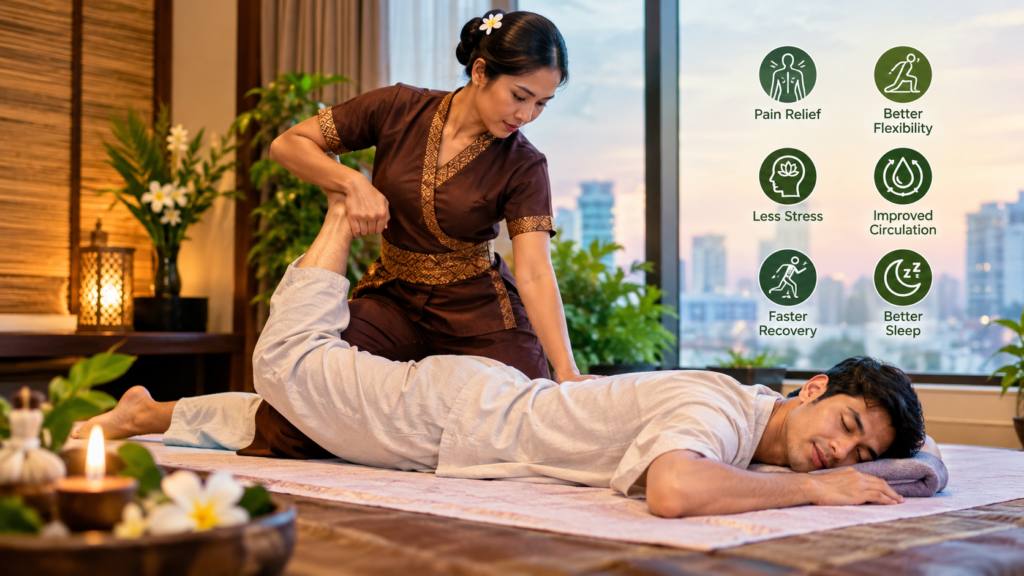
Thai massage benefits include pain relief, better flexibility, lower stress, improved circulation, and faster muscle recovery. Research shows measurable drops in pain scores after just a few sessions, along with reduced muscle tension and improved range of motion. Below, you will find a research backed breakdown of every major benefit, what a session actually feels like, who should avoid it, and how often you should book one, including where to find genuine thai massage in Banani.
Thai massage is one of the oldest healing practices in the world, and it has grown from a temple tradition in Thailand into a global wellness staple. In Dhaka, more people are turning to Thai massage every month to manage stress, recover from long work hours, and ease chronic pain without relying only on medication. If you have been searching for a reliable stress relief massage in Dhaka, this guide covers the science, the technique, and everything you need to know before booking a session.
What Is Thai Massage?
Thai massage, also known as Nuad Thai, is a full body treatment that blends acupressure, assisted stretching, and rhythmic compression. Unlike a typical oil massage where you lie still, Thai massage moves your body through yoga like positions while the therapist applies pressure along specific energy lines called Sen lines. No oil is usually required for the traditional style, and sessions are done on a padded mat or a firm massage bed while you wear loose, comfortable clothing.
Origins and History of Thai Massage
Thai massage is believed to be over 2,500 years old and combines influences from Ayurvedic medicine, traditional Chinese medicine, and Buddhist spiritual practice. It developed in Thailand as part of traditional medicine and is still taught and preserved as a national heritage practice today. Anyone planning a wellness trip to Thailand can find verified information about the practice and its cultural background through the Tourism Authority of Thailand, the country’s official tourism board.
How Thai Massage Is Different From Other Massages
Most Western style massages, such as Swedish or deep tissue, focus on kneading and gliding strokes over muscles while you remain passive. Thai massage instead involves the therapist actively moving your limbs, joints, and spine through a sequence of stretches, similar to being guided through a slow yoga class. This is why it is often called assisted yoga. The combination of pressure work and stretching is what sets it apart and is also why many people report benefits that go beyond simple relaxation.
Top Thai Massage Benefits Backed By Research
Clinical studies, systematic reviews, and market research all point to consistent benefits from regular Thai massage. Below are the most well documented benefits, along with what the research actually found.
1. Pain Relief and Reduced Muscle Tension
Thai massage has one of the strongest evidence bases among traditional bodywork practices when it comes to pain.
- A systematic review of six studies on traditional Thai massage for chronic musculoskeletal pain found pre to post treatment pain reductions ranging from 25 percent to 80 percent.
- The same research linked these improvements to better disability scores, lower perceived muscle tension, improved flexibility, and reduced anxiety.
- Pain relief effects were reported to last as long as 15 weeks after treatment in some cases.
- A short, 30 minute session was shown to significantly lower muscle tension and pain intensity in people with upper back pain linked to myofascial trigger points, measured using electromyogram readings.
Chronic Musculoskeletal Pain
People dealing with long term stiffness, tightness, or general body pain often see gradual but lasting improvement with repeated sessions rather than a single visit.
Lower Back Pain
In a study involving 120 participants with nonspecific low back pain, traditional Thai massage reduced both pain and disability, with results often comparable to joint mobilization or Swedish massage in the short term.
2. Improved Flexibility and Range of Motion
Because Thai massage physically stretches the body through assisted postures, it has a direct and measurable effect on flexibility. Multiple studies link the practice to better joint mobility, improved posture, and greater range of motion, partly because the stretching and pressure combination improves blood flow and oxygen delivery to muscle tissue. This makes it a popular choice for people recovering from injury as well as athletes who need to stay limber between training sessions.
3. Stress Relief and Better Mental Health
Stress reduction is one of the most consistently reported outcomes of Thai massage, and it is a major reason people search for a stress relief massage in Dhaka rather than trying to manage tension on their own.
- Research has measured lower levels of stress markers such as salivary alpha amylase and cortisol after sessions.
- Heart rate and self reported anxiety scores also tend to drop following treatment.
- The rhythmic, full body nature of the massage promotes a calming effect that many people compare to the relaxation felt after a yoga class.
If you deal with constant mental fatigue from work or daily pressure, this is often the benefit clients notice first, even before physical improvements.
4. Better Blood Circulation and Energy Flow
The stretching and compression techniques used in Thai massage encourage blood flow throughout the body. Improved circulation means muscles and organs receive oxygen and nutrients more efficiently, which supports faster recovery and can leave you feeling more energized rather than drained after a session, a contrast to how some people feel after a very deep, purely pressure based massage.
5. Headache and Migraine Relief
For people who suffer from tension headaches or migraines, Thai massage may offer real relief.
- A study involving nine sessions over three weeks found reductions in the intensity of chronic tension headaches.
- Some reports noted the relief lasted from several days up to around 15 days after a course of treatment.
6. Support for Knee Osteoarthritis and Joint Pain
Trials examining Thai massage for knee osteoarthritis found pain relief comparable to ibuprofen over a three week period. When combined with a structured exercise program, results improved further, with better pain scores and improved walking ability among participants.
7. Faster Muscle Recovery for Athletes
Athletes and active individuals often use Thai massage to recover between training sessions.
- A randomized trial found that Thai massage led to better recovery from calf muscle fatigue compared to simple rest and stretching alone.
- The deep stretching component helps release tightness that builds up after intense physical activity, particularly in the legs and shoulders.
8. Better Sleep Quality
By lowering stress hormones and easing physical tension, many people find it easier to fall asleep and stay asleep after a Thai massage session, especially when booked in the evening after a demanding day.
9. Support for Immunity and Recovery in Older Adults
Emerging research has looked at Thai massage for elderly populations, with one study noting changes in certain immune cell markers after six weekly sessions, suggesting a possible supportive role in immune health alongside its physical benefits.
10. Additional Emerging Benefits
Beyond the well studied benefits above, researchers have also explored Thai massage for stroke recovery, noting improvements in daily activity performance, pain levels, and sleep quality among stroke patients receiving regular sessions as part of a broader recovery plan.
Thai Massage vs Other Massage Types
If you are deciding between Thai massage and another style, this comparison table breaks down the key differences.
| Feature | Thai Massage | Swedish Massage | Deep Tissue Massage |
| Technique | Stretching, acupressure, joint mobilization | Long, gliding strokes with oil | Firm, focused pressure on deep muscle layers |
| Pressure level | Moderate to firm, active movement | Light to moderate | Firm to intense |
| Oil used | Usually not required | Yes | Yes |
| Clothing | Loose, comfortable clothing | Minimal, draped with sheet | Minimal, draped with sheet |
| Best for | Flexibility, stress, chronic tension | General relaxation | Targeted muscle stiffness and knots |
| Client involvement | Active, body is moved by therapist | Passive | Passive |
What to Expect During a Thai Massage Session
Knowing what happens before, during, and after your session can make the experience far more comfortable, especially for first timers.
Before Your Session
Wear or change into loose, breathable clothing since the therapist will move your limbs through various positions. Arrive a few minutes early, avoid a heavy meal right before your appointment, and mention any injuries, surgeries, or health conditions to your therapist beforehand.
During the Massage
You will lie on a padded mat or firm bed while the therapist uses hands, palms, elbows, knees, and sometimes feet to apply pressure and guide you through stretches. Sessions typically last 60 to 90 minutes and move through the entire body, including the legs, back, arms, and neck.
After Your Session
It is common to feel deeply relaxed, slightly sore in areas that were tight, or noticeably more flexible immediately afterward. Drinking water and taking it easy for the rest of the day helps the body settle after the stretching and pressure work.
Who Should Avoid Thai Massage
Thai massage is generally well tolerated with few serious side effects reported in studies, but it is not suitable for everyone.
Health Conditions to Consider
- Acute injuries, fractures, or recent surgery
- Severe osteoporosis or fragile bone conditions
- Uncontrolled high blood pressure or heart conditions
- Active infections, fever, or skin conditions in the treatment area
Pregnancy and Thai Massage
Some traditional practices adapt Thai massage for pregnant clients, but the deep stretching and pressure techniques are not appropriate for every stage of pregnancy. Always speak with a doctor before booking, and inform your therapist immediately if you are pregnant so the session can be adjusted or postponed.
Thai Massage Popularity and Market Growth
Thai massage is not just a wellness trend, it is a fast growing global industry backed by real demand.
Global Market Statistics
- The global Thai massage therapy market was estimated at 6.2 billion US dollars in 2024 and is projected to reach 10.5 billion US dollars by 2032, growing at roughly 14.1 percent per year.
- This growth is largely driven by rising interest in alternative therapies, wellness tourism, and mind body practices worldwide.
- Search interest remains high, with the core keyword generating well over 100,000 monthly searches globally, and millions of related social media posts.
Growing Popularity in Bangladesh and Dhaka
Wellness culture is expanding quickly across Dhaka, with more people seeking private, professional spa experiences to manage the stress of city life. As awareness of traditional therapies grows, Thai massage has become one of the most requested treatments at premium spas across areas like Banani, Gulshan, and Baridhara, and the demand for a dependable stress relief massage in Dhaka continues to rise every year.
Thai Massage in Banani: Why Location Matters
Where you get your massage matters almost as much as the technique itself. A genuine thai massage in Banani should be performed by a trained therapist who understands proper pressure, sequencing, and stretching, delivered in a private, hygienic room rather than a rushed, crowded setting.
What to Look for in a Banani Spa
- Trained therapists who follow correct Thai massage technique rather than a generic full body rub
- Private rooms with clean linens and a quiet, calm environment
- Clear pricing and session timing with no hidden charges
- Easy access from Gulshan, Baridhara, and Niketon, since most clients in the area are coming from nearby offices or homes
Why Choose Premium Spa BD for Thai Massage in Banani
Premium Spa BD offers traditional thai massage in Banani in a private, clean, and calm setting, easily accessible from Gulshan, Baridhara, and Niketon. Every session is performed by trained staff in a hygienic private room, using proper technique to deliver the pain relief, flexibility, and stress reduction benefits covered above. If you have been looking for a genuine stress relief massage in Dhaka, you can contact us to check availability and book a time that works for you.
Certified Therapists and Private Rooms
Each room is set up for privacy and comfort, with clean linens and a quiet atmosphere so you can fully relax without distractions.
Location and Booking
The spa is located on Road 11, Banani, Dhaka, making it a convenient stop whether you are coming from work in Gulshan or spending the day around Banani.
How Often Should You Get a Thai Massage?
For general stress relief and relaxation, once every two to four weeks is a common routine for many clients. If you are managing chronic pain, tight muscles, or recovering from an injury, more frequent sessions, such as once a week for a few weeks, tend to produce better and longer lasting results before tapering off to a maintenance schedule. Always adjust frequency based on how your body responds and any guidance from a healthcare provider.
FAQs About Thai Massage Benefits
Q1. What are the main benefits of Thai massage?
Ans: The main benefits include pain relief, improved flexibility, better blood circulation, stress reduction, and faster muscle recovery, supported by multiple clinical studies.
Q2. Is Thai massage good for back pain?
Ans: Yes, research shows traditional Thai massage can reduce pain and disability in people with nonspecific low back pain, with results often comparable to joint mobilization or Swedish massage in the short term.
Q3. How long do the effects of Thai massage last?
Ans: Pain relief effects have been reported to last up to 15 weeks in some studies, though results vary depending on the individual, the condition being treated, and how often sessions are repeated.
Q4. Does Thai massage hurt?
Ans: Thai massage involves firm pressure and deep stretching, so some areas of tension may feel intense during the session, but it should not be sharply painful. Always tell your therapist if the pressure feels too strong.
Q5. Can Thai massage help with stress and anxiety?
Ans: Yes, studies have recorded lower stress hormone levels and reduced self reported anxiety after Thai massage sessions, making it a popular option for anyone searching for a stress relief massage in Dhaka.
Q6. Where can I get a good thai massage in Banani?
Ans: Premium Spa BD offers traditional Thai massage in a private, hygienic room in Banani, with trained therapists and easy access from Gulshan, Baridhara, and Niketon.
Q7. Who should avoid Thai massage?
Ans: People with acute injuries, severe osteoporosis, uncontrolled heart conditions, active infections, or certain stages of pregnancy should consult a doctor before booking a session.
Q8. How often should I get a Thai massage?
Ans: Once every two to four weeks works well for general relaxation, while weekly sessions may help more with chronic pain or muscle recovery before moving to a lighter maintenance schedule.
Final Thoughts
Thai massage offers one of the most well rounded benefit profiles among traditional bodywork practices, backed by real clinical research covering pain relief, flexibility, stress reduction, and recovery. Whether you are dealing with chronic tension, recovering from a busy week, or simply looking for a dependable stress relief massage in Dhaka, a well performed Thai massage session can make a noticeable difference in how your body and mind feel. If you are near Banani, Gulshan, or Baridhara and ready to experience these benefits firsthand, Premium Spa BD offers a private, professional setting for genuine thai massage in Banani to help you unwind and recover.
